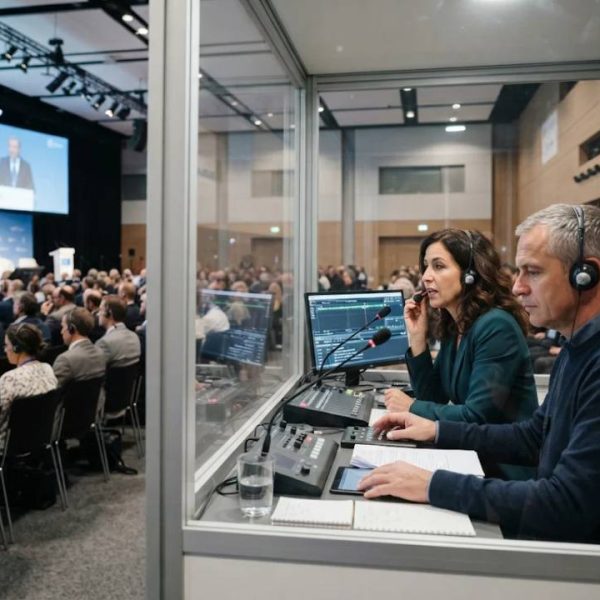
A conference runs on understanding. When delegates speak different languages, interpreters become the bridge that keeps debates, negotiations and presentations moving. Good interpreting looks effortless from the audience, yet it depends on careful preparation, the right equipment and a clear brief from the organizer.
Interpreting Versus Translation
Translation works with written text and allows time for revision. Interpreting happens live, in the moment, with no second chance.
Choose interpreters for speech and translators for documents, and never ask one person to do both at the same time.
Simultaneous Interpreting
Interpreters sit in a booth, listen through headphones and speak into a microphone while the speaker continues. Delegates hear the result in real time.
This mode suits large events, multilingual panels and live broadcasts.
Consecutive Interpreting
The speaker pauses after a few sentences and the interpreter renders the message. It takes longer but needs little equipment.
It works well for interviews, small meetings and speeches with a formal tone.
Whispered Interpreting
Also called chuchotage, this mode suits one or two listeners. The interpreter sits close and whispers the translation.
It is useful in business meetings where only a few people need support.
Remote and Hybrid Events
Remote interpreting now serves webinars, board meetings and international summits. Delegates join from different cities and still hear their own language.
Test the platform, audio quality and internet speed well before the event starts.
Plan Language Combinations
List every language your audience needs and decide which are active and which are passive. Rare pairs may need relay interpreting through a common language.
Early planning avoids last-minute searches for scarce specialists.
Share Materials in Advance
Send agendas, slides, speeches and glossaries a week before the event. Interpreters prepare vocabulary and background in advance.
Late materials reduce accuracy, especially for technical subjects.
Prepare a Terminology List
Create a short glossary with names, acronyms and key terms. Mark words that must stay in the original language.
Shared terminology keeps booths and written translations consistent.
Team Size and Rest Breaks
Simultaneous interpreting is mentally demanding, so interpreters work in pairs and swap roughly every thirty minutes. Long sessions need more than one team.
Underestimating this need affects quality more than almost any other factor.
Booths and Equipment
Booths should be soundproof, ventilated and placed with a clear view of the stage. Receivers and headsets must be tested for every seat.
Plan spare batteries and a technician on site.
Supporting Written Translation
Events also need translated programs, signage, badges and follow-up reports. Coordinating them with interpreting ensures consistent names and terms.
Specialists in english to polish translation can prepare event documents for Central European delegates.
Subject Matter Expertise
Legal hearings, medical conferences and engineering workshops each have their own vocabulary. Choose interpreters with experience in the field.
Briefing sessions before the event help close any remaining gaps.
Professional Standards
Look for interpreters who follow a code of ethics, including confidentiality and impartiality. The International Association of Conference Interpreters publishes standards and guidance for the profession.
Ask for references from similar events.
Cultural Awareness
Interpreters do more than switch languages. They also notice tone, politeness and cultural references that could cause confusion.
A short pre-event conversation helps align on style and formality.
Multilingual Marketing Around Events
Event websites, invitations and social posts reach more people when published in several languages. Local keywords help attendees find them.
Our guide to localization and SEO translation shows how to align search and translation work.
Budgeting for Interpreting
Costs depend on language pair, duration, equipment and travel. Request detailed quotes that list every item.
Cheaper options often hide extra fees or use less experienced staff.
Confidentiality and Security
Board meetings and negotiations involve sensitive information. Sign non-disclosure agreements and use secure platforms for remote sessions.
Limit access to recordings and shared files.
Working With Speakers
Ask speakers to talk at a steady pace, avoid long jokes and pause between ideas. Provide notes to interpreters whenever possible.
A short sound check before the event helps everyone.
Gather Feedback
After the event, ask delegates how clear the interpreting was. Review recordings where permitted and note any terminology problems.
Use the results to improve the next event.
Common Mistakes
Typical errors include booking too late, skipping briefings, using one interpreter for a full day and ignoring audio quality.
Each one is easy to avoid with a simple checklist.
Choosing a Language Partner
A long-established provider can supply interpreters, equipment and translators from one team. That simplifies contracts, schedules and quality control.
Ask about experience with events like yours and about backup plans.
Final Advice
Treat interpreting as part of event design, not as an add-on. Plan early, share materials and respect the work of the booth.
Audiences notice the difference immediately.
Measure Event Success
Track attendance by language, questions asked and survey scores. These numbers show whether multilingual support is working and where to invest next.
Share the results with sponsors to justify future budgets.
Accessibility Beyond Language
Some delegates also need sign language, captions or other support. Plan these services alongside spoken interpreting so everyone can follow the program.
Inclusive events build stronger reputations and wider audiences.
Build Long-Term Relationships
Working with the same interpreters over several events builds shared knowledge and trust. They learn your terminology, your speakers and your style.
That familiarity improves quality and saves preparation time every season.