Business Interpreting for Meetings With Japanese Partners
- November 27, 2025· Article by Maria Jones
- Languages , interpreting services
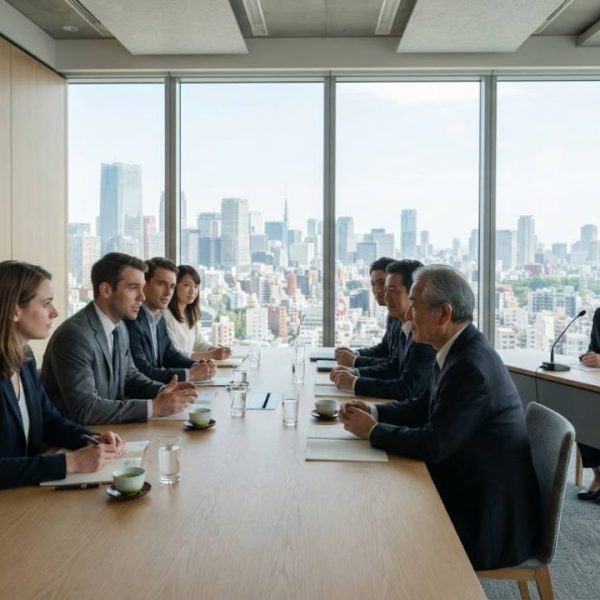
A British engineering firm finally secures a meeting with a major Japanese manufacturer. The delegation arrives, business cards are exchanged with care, and the conversation begins in English. Within half an hour, it is clear that the Japanese side understands the slides but hesitates to ask questions. Important concerns stay unspoken, and the meeting ends politely without any real progress.
Many companies experience this. Professional interpreting turns polite meetings into productive ones. This article explains how to use it well.
Why English Is Not Always Enough
Many Japanese professionals read English well but feel less comfortable speaking it, especially in negotiations or technical discussions. They may avoid asking questions rather than risk misunderstanding. When both sides can speak their own language, discussion becomes more open and detailed.
A good interpreter does not slow a meeting down. They make it possible for everyone to contribute.
Choosing the Right Mode
For most business meetings with Japanese partners, consecutive interpreting is the standard. The speaker talks for a few sentences, then the interpreter renders them. This suits negotiations, factory visits and technical reviews, where precision matters more than speed.
For larger events such as conferences or product launches, simultaneous interpreting with booths and headsets keeps the programme on time. Professional interpreting services can recommend the right mode and team size for each format.
Brief the Interpreter Thoroughly
Japanese and English differ greatly in structure, and many business concepts carry cultural weight. Interpreters need preparation:
- agenda and list of participants with titles,
- presentations, product data and technical drawings,
- company-specific terms and abbreviations,
- your objectives and sensitive topics.
A short meeting with the interpreter before the session is invaluable. It helps them understand what you want to achieve and how you want to come across.
Understand Japanese Business Communication
Japanese business culture values harmony, hierarchy and careful consensus building. Direct refusals are rare. Phrases that sound like "we will consider it" may signal hesitation. Decisions are often made after the meeting, through internal discussions involving many people.
An experienced interpreter can help you notice these signals. Ask for their impressions during breaks and after the meeting, not only for the translation itself.
Written Materials Support the Conversation
Meetings are only part of the process. Japanese partners usually study documents carefully afterwards and share them internally. Translating key materials makes a strong impression and avoids misunderstandings.
Technical specifications, test reports and manuals benefit from specialist technical translation services with engineers who know the terminology in both languages. Investment proposals, budgets and annual figures need financial translation services to ensure that numbers, accounting terms and forecasts are rendered precisely.
Beyond the meeting itself, deal documents such as memoranda of understanding, partnership agreements and term sheets need the same care in writing. Professional business translation services help UK firms prepare international deal paperwork that survives scrutiny in both boardrooms. Consistent, accurate written materials show Japanese partners that a company is serious about a long-term relationship and smooth every subsequent negotiation round.
Practical Tips for the Meeting
- Speak in short segments and pause for the interpreter.
- Look at your Japanese counterpart, not at the interpreter.
- Avoid idioms, sarcasm and jokes that depend on wordplay.
- Write key numbers and dates on a whiteboard or slide.
- Summarise agreements at the end and confirm them in writing.
Market Knowledge
Before entering the Japanese market, it is worth studying regulations, business practices and sector trends. The Japan External Trade Organization provides information for foreign companies interested in doing business in Japan, including market reports and support services.
Remote Meetings
Many follow-up meetings take place online. Video interpreting works well if participants use good headsets and the host manages turn-taking clearly. Platforms with separate interpreting channels allow simultaneous interpreting for larger online meetings.
Building Long-Term Relationships
Japanese companies value stable partners. Working with the same interpreter over many meetings builds continuity: they know the project history, the people involved and the terminology. Over time, this consistency becomes part of the trust between the companies.
Treat your interpreter as part of the team, not as a last-minute supplier.
Factory Visits and Site Tours
Japanese partners often want to see production in person before committing. Factory tours bring their own challenges: noise, safety equipment, moving between areas and technical questions asked on the spot. Interpreters need to know the route, the processes being shown and the vocabulary of the machines involved. Portable tour-guide systems with headsets let the interpreter speak quietly to the whole group without shouting over machinery.
Plan the tour in advance with the interpreter, share photos or diagrams of each station and prepare a short glossary of process terms. After the visit, send a translated summary of what was shown and the answers given to questions. Japanese delegations usually write detailed internal reports after visits, and accurate written follow-up helps them present your company correctly to decision-makers at home.
Gifts, Names and Small Courtesies
Small details matter in Japanese business settings. Ask the interpreter how to address each participant, whether a small gift is expected and how seating should be arranged. These questions take seconds and avoid awkward moments that no translation can fix.
Final Thoughts
Meetings with Japanese partners succeed when everyone can speak clearly, ask questions and understand nuances. Professional interpreters, well-prepared materials and respect for Japanese business culture help turn first meetings into lasting partnerships.